
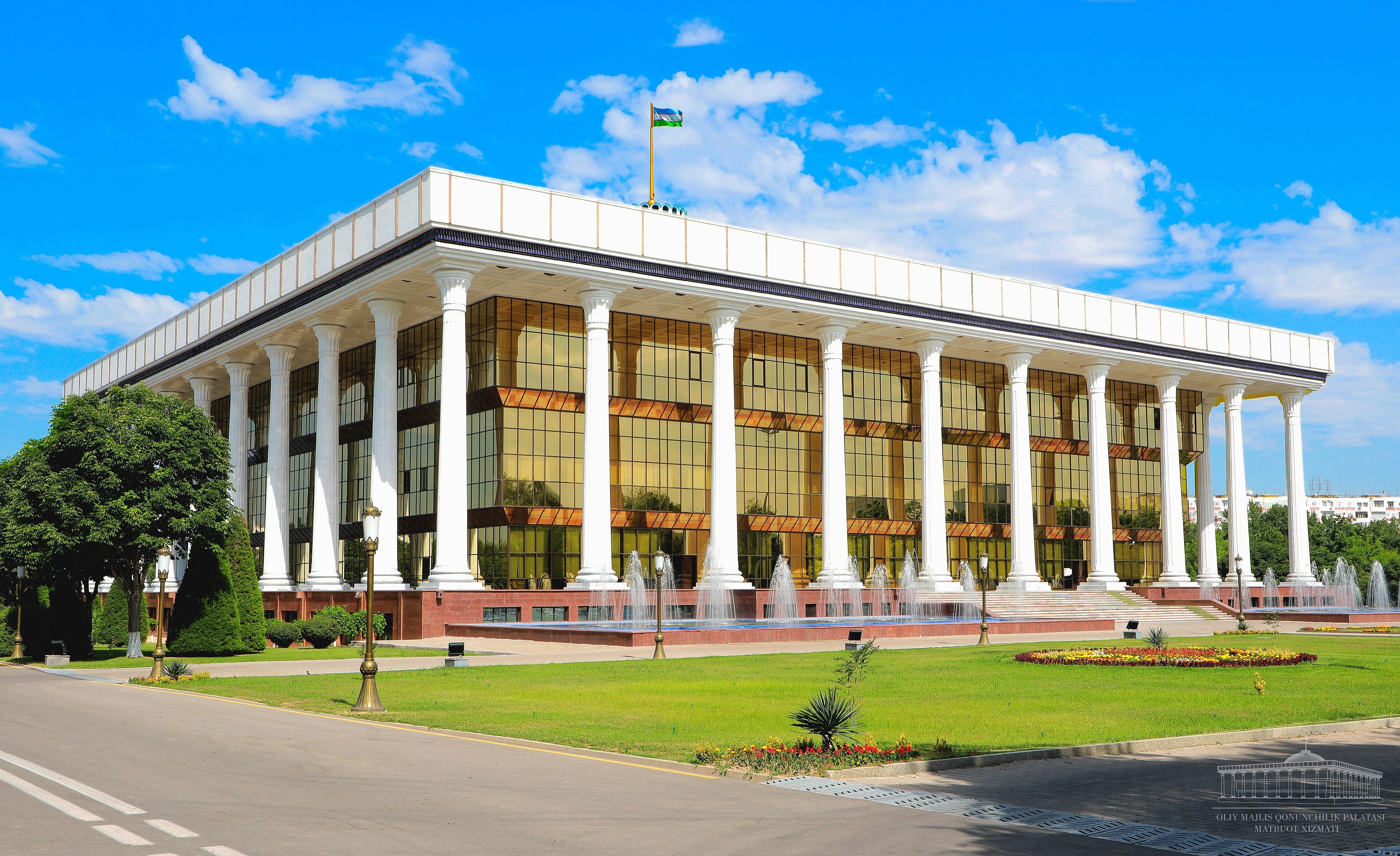
The building is easily recognizable due to its monumental architecture. It was constructed in 1997 from glass and concrete and clad with valuable types of marble.
The project was
developed by architect Valeriy Akopdzhanyan: his team studied parliament buildings
of various countries and applied traditional compositional techniques of
Eastern architecture. The aivans (covered verandas) with canopies on 36
columns, 18 meters high — usually located inside buildings — are here brought
outside. This emphasizes the solemn character of the building and visually
gives it lightness.
The building is
shaped as a cube with a side length of 86 meters.
The
32-meter-high session hall is designed for 350 deputies; the second tier
provides seating for journalists and diplomats.
The white cube
with dark glazing is crowned by a turquoise dome with a diameter of 35 meters
and a height of 11.5 meters.
Adjacent to the
building are the “Milliy Bog” park with the Alley of Writers and the Abulkasim
madrasah with workshops of folk craftsmen.
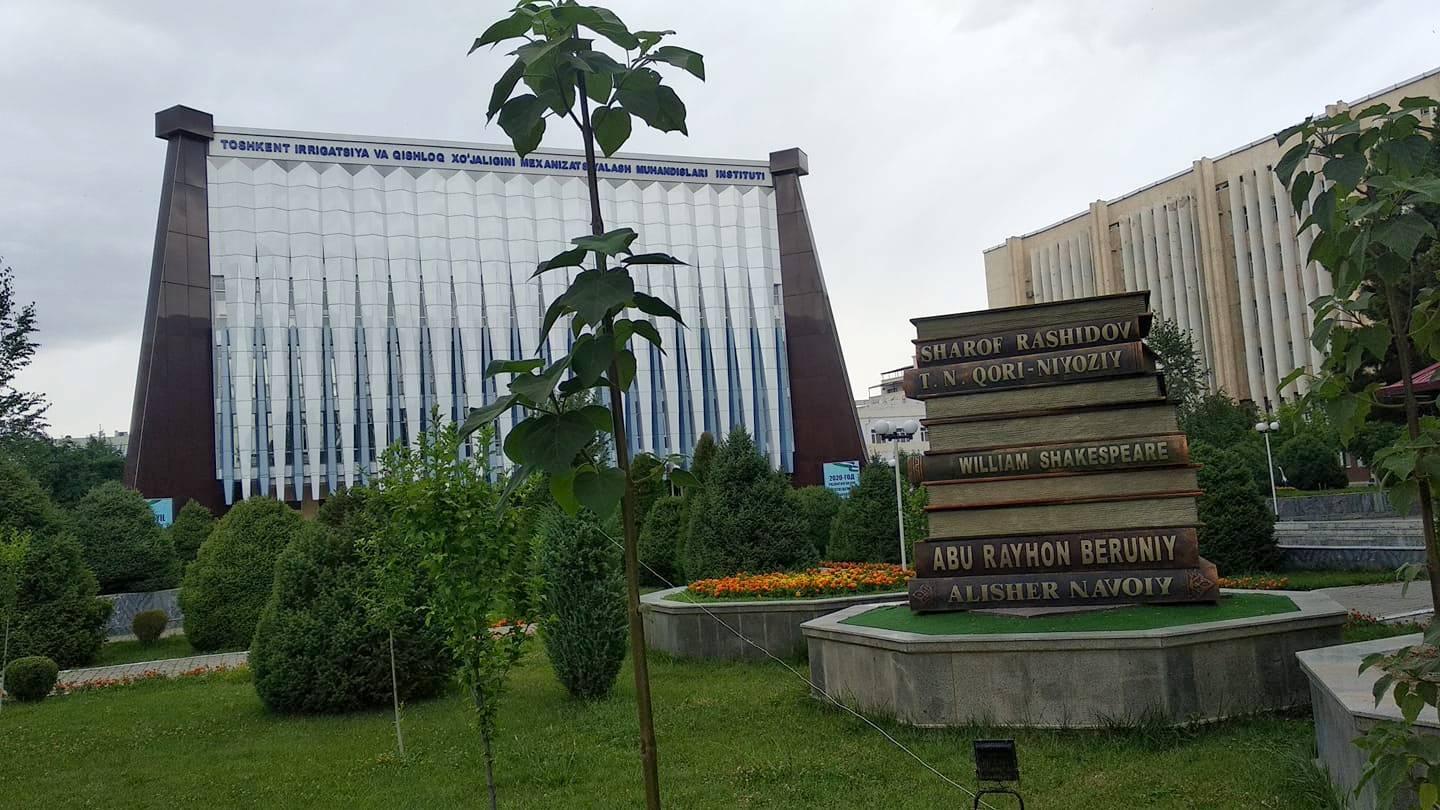
The National Research University “Tashkent Institute of Irrigation and Agricultural Mechanization E...
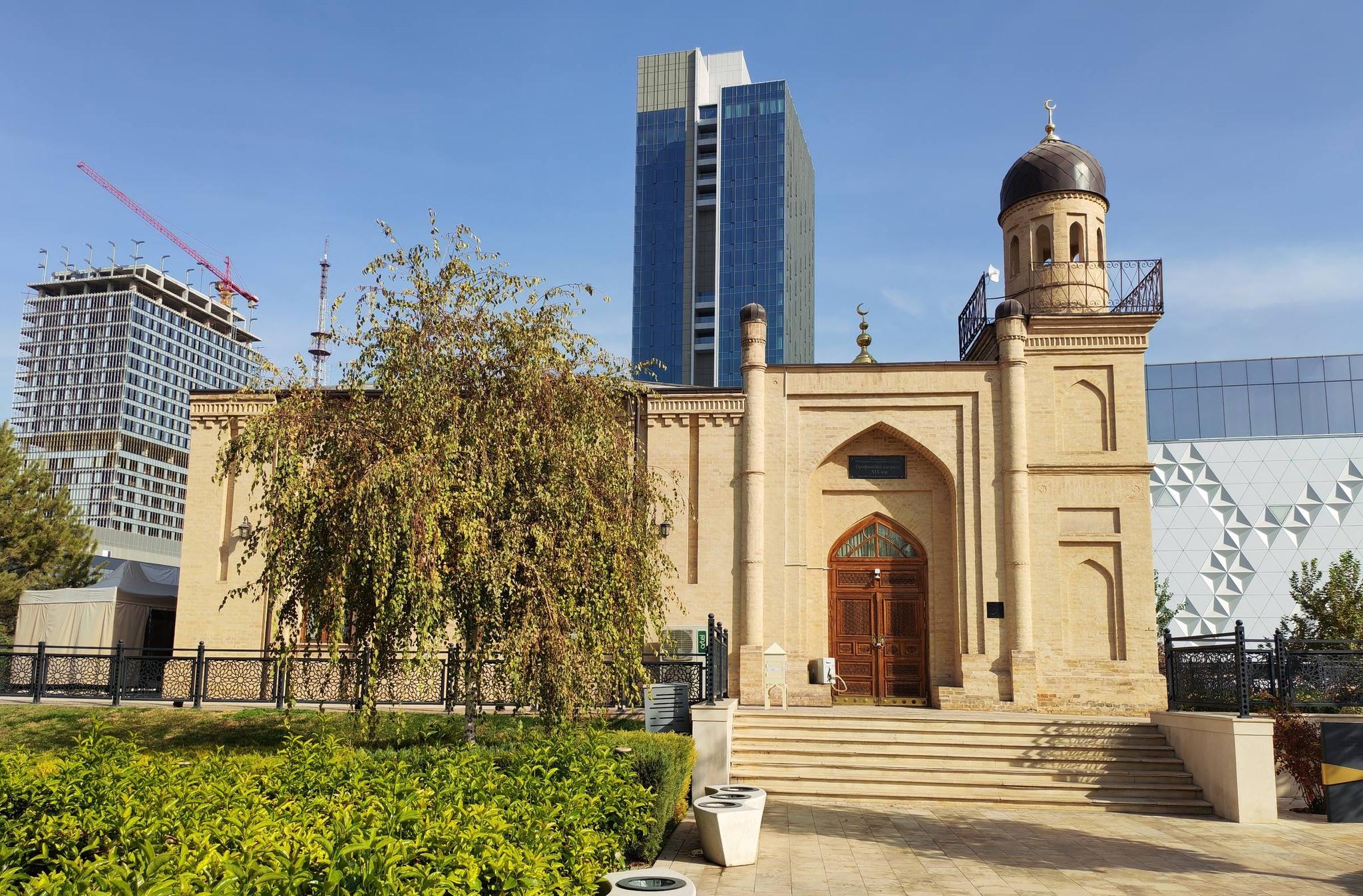
The mosque, striking with its unusual lines, is located within Tashkent City Park. This distinctive...
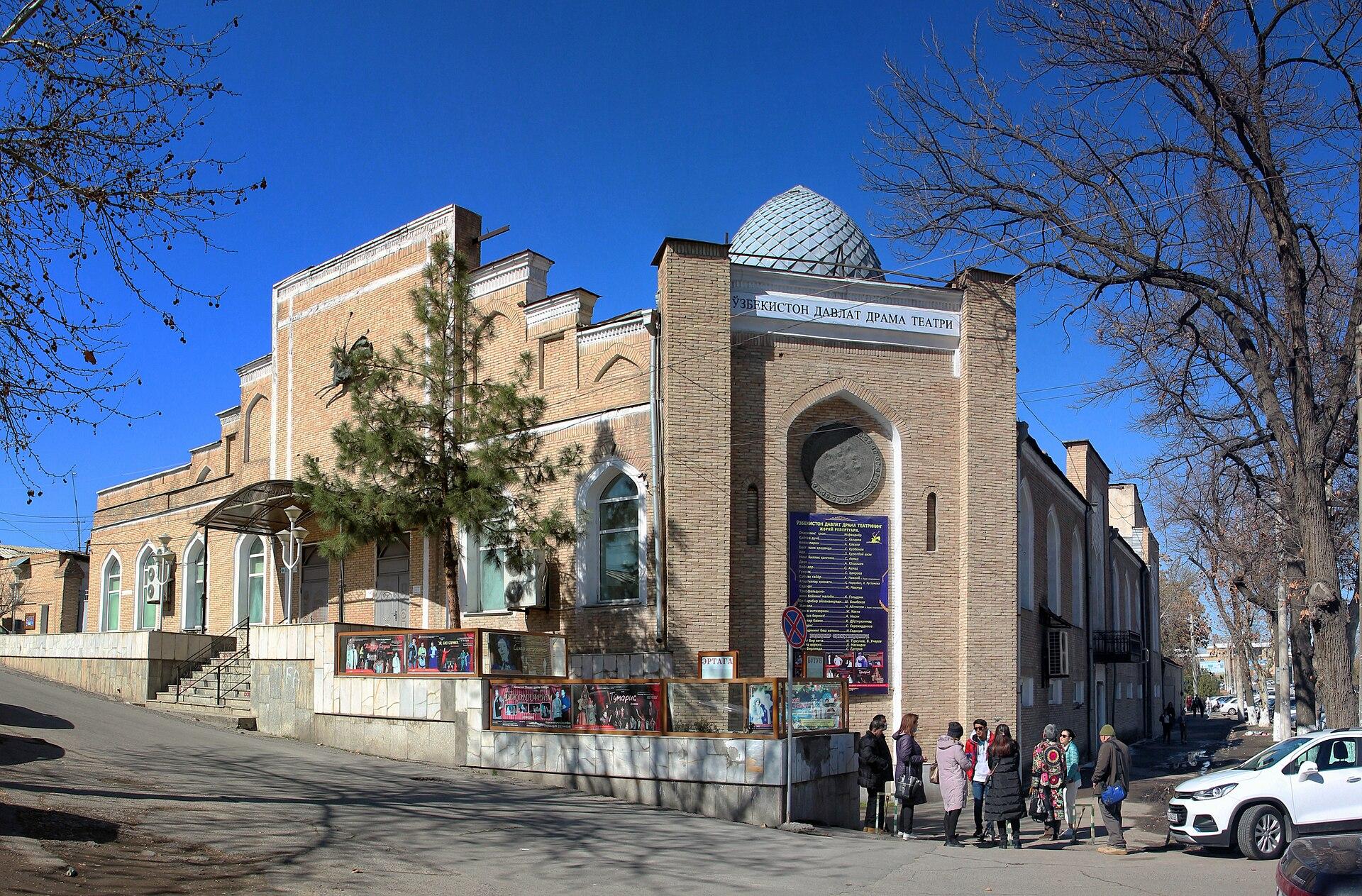
The beautiful and distinctive theater building at the intersection of Zarkaynar and Gulbazar street...
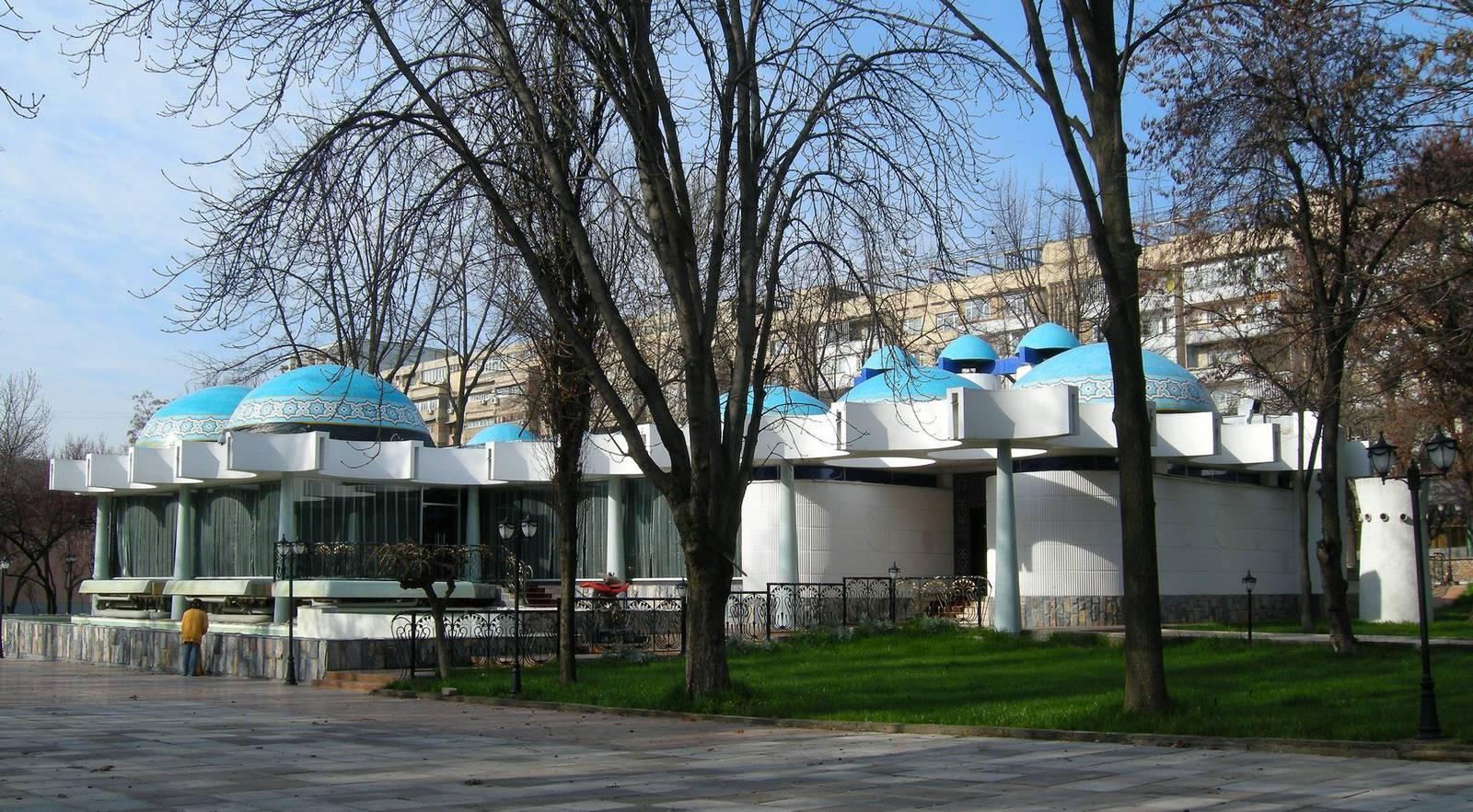
The café, opened in 1970, was built according to the design of architect Vili Islamovich Muratov, e...